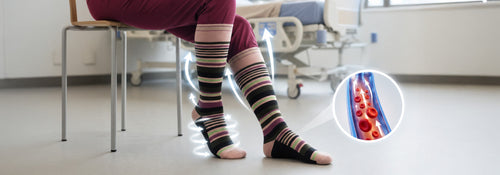
20-30 mmhg
Why Nurses' Legs Hurt After a 12-Hour Shift (And the Fix That Actually Works)
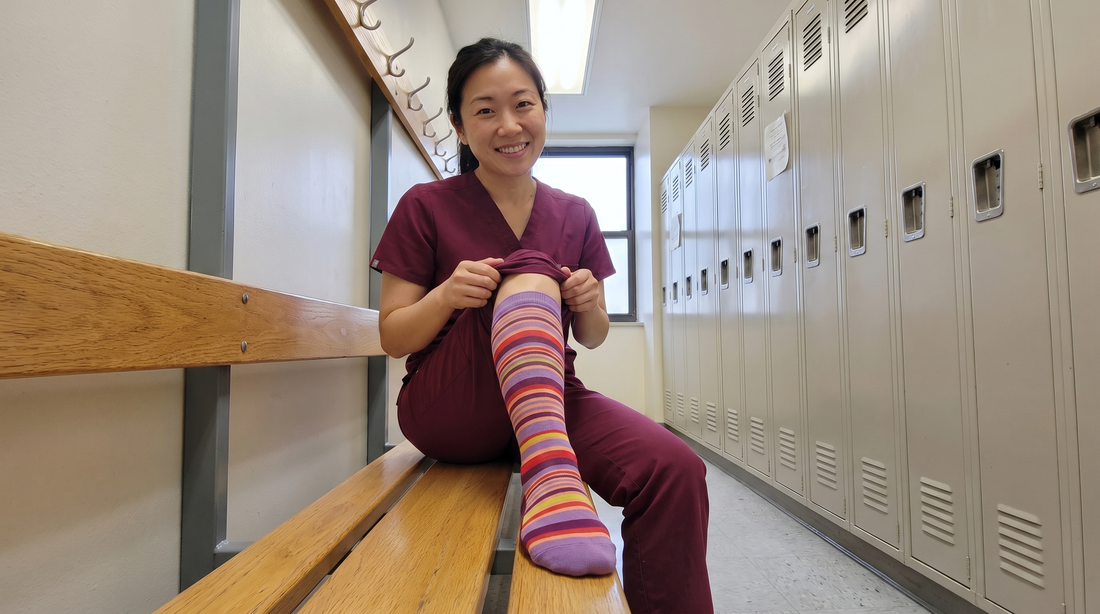
You already know the feeling. You get home after a long shift, sit down for the first time in hours, and your legs feel like they've been filled with wet cement. Ankles puffed. Calves aching. Feet throbbing. And somewhere in the back of your mind, you wonder — is this just part of the job, or is something actually wrong?
It's not just the job. It's your circulation — and understanding what's happening inside your legs during a long shift changes everything about how you take care of them.
Here's what's actually going on, and what the evidence says actually helps.
The Part Nobody Talks About in Nursing School
Nurses are among the most physically active professionals in any workplace. Research shows nurses walk an average of 4–5 miles during a single 12-hour shift — ranking fourth for highest average step count of any profession, behind only firefighters, corrections officers, and healthcare assistants.
But here's what the step count doesn't capture: the long stretches of standing still. Charting at a station. Waiting in a medication room. Holding a position during a procedure. And it's the static standing — not the walking — that does the most damage to your legs over time.
This isn't a sign that you're not fit enough. It's basic physiology. And once you understand the mechanism, the fix becomes obvious.
What's Actually Happening to Your Legs During a Long Shift
Gravity Is Working Against You — All Day
Your heart pumps freshly oxygenated blood downward to your legs with ease — gravity helps with that part. The problem is the return trip. Your veins have to push blood back up toward the heart against gravity, and they need help to do it.
That help comes primarily from your calf muscle. Every time you take a step, your calf contracts and acts like a secondary pump, squeezing blood upward through your veins. It's called the calf muscle pump — and it's remarkably effective when you're moving.
When you're standing still, it stops working. Blood pools in the lower legs. Fluid leaks from the small blood vessels into the surrounding tissue. By the end of a long shift, that's the heaviness, swelling, and aching you feel.
Your Veins Are Under More Pressure Than You Think
A single long shift of pooling is uncomfortable. Years of it is a genuine health risk.
Repeated pooling puts sustained pressure on vein walls and the tiny valves inside them. Over time, those valves can weaken — a condition called venous insufficiency — which makes the pooling worse with each passing shift. Research shows nurses and other on-their-feet professionals are at significantly higher risk of developing venous insufficiency and varicose veins than the general population.
Early warning signs to watch for:
- Sock indentations that last more than 15 minutes after you take them off
- Ankles that look noticeably puffy by the end of your shift
- Legs that ache or feel heavy even on your days off
- Visible veins that weren't there a year ago
These aren't things to push through. They're your body telling you the system is under strain.
It's a Real Occupational Risk — Not Just Discomfort
Untreated, chronic venous insufficiency can progress to varicose veins, persistent swelling, skin changes, and in serious cases, leg ulcers. Most nurses quietly live with early symptoms for years before seeking help — often because they assume it's just part of a physically demanding career.
It doesn't have to be. The good news is that the fix is simple, inexpensive, and something you can start tomorrow.
5 Things That Make Leg Pain Worse on Shift
- Standing still more than walking. Static standing is harder on your veins than walking because the calf pump isn't activating. Even small movements — shifting weight, doing ankle raises at the nursing station — make a real difference.
- Hard floors without anti-fatigue mats. Hard surfaces increase pressure on the foot's structures and contribute to fatigue that radiates up the leg.
- Unsupportive footwear. Shoes without proper arch support limit the calf muscle's ability to contract fully, reducing the effectiveness of the natural pump.
- Hot environments. Heat dilates blood vessels, making pooling worse. This is why leg symptoms tend to be more noticeable during summer shifts or in warmer units.
- Skipping fluids. Dehydration thickens blood, making it harder for veins to push it upward efficiently. Staying hydrated through a shift matters more than most nurses realize.
What Actually Helps (Evidence-Based, Not Just Advice)
Graduated Compression — The One Tool With Real Clinical Evidence
Compression socks are the most well-researched intervention for on-feet workers, and the evidence is clear: worn correctly, they reduce leg fatigue, swelling, and long-term venous damage.
But not all compression socks are equal — and most nurses are wearing the wrong level.
Most consumer compression socks are 15–20 mmHg. For a short day or light activity, that's fine. For a 12-hour nursing shift, the evidence — and the feedback from nurses who've tried both — points firmly to 20–30 mmHg. That's the level where you'll notice a real difference in how your legs feel by hour eight.
Here's how graduated compression works: the sock is firmest at the ankle and gradually decreases in pressure as it moves up your calf. This acts like an external calf pump — mechanically assisting blood flow back toward your heart, even when you're standing still.
The right compression for nurses: 20–30 mmHg graduated compression for full 10–12 hour shifts. Look for a non-binding cuff that won't cut circulation at the top of the calf — a common problem with lower-quality options.
Put Them On Before Your Shift Starts — Not During
This is the single most common mistake. Most nurses put compression socks on midway through a shift, when their legs are already swollen and tired. By that point, you're playing catch-up.
Compression works best when your legs are at their least swollen — first thing in the morning, before you've been upright. Make it part of your pre-shift routine the same way you'd put on your scrubs. Keep them by your work bag so the habit sticks.
The Recovery Window After Your Shift
What you do in the first 20 minutes after a shift matters as much as what you wear during it.
- Elevate your legs above your heart for 15–20 minutes. Lying down with your legs propped on pillows lets gravity drain fluid passively — it's more effective than it sounds.
- Ankle pumps and calf raises. Five minutes of ankle circles and heel raises increases lymphatic flow significantly compared to just sitting still. Simple and surprisingly powerful.
- Keep the socks on for the commute home. Your legs are still pooling when you leave the hospital. Wearing compression for the drive or transit ride extends the benefit.
What Won't Help (Save Your Time and Money)
- Compression sleeves without foot coverage. They miss the ankle — the exact spot where pooling starts and where compression needs to be firmest.
- Very low mmHg socks (8–15). Not enough pressure for a full nursing shift. You may feel nothing from them at all.
- Soaking your feet after a shift. Temporary relief only. It doesn't address the underlying circulation issue at all.
"Healthcare workers are among the patients I see most often with early venous disease — and among the most surprised when I tell them it's preventable. Compression, worn consistently and worn correctly, is the most practical tool available. The key word is consistently."
— Dr. Jean Segal, Surgeon | Founder, Dr. Johnny's
Frequently Asked Questions
What compression level is best for nurses on 12-hour shifts?
Most specialists recommend 20–30 mmHg for nurses working full shifts. This level provides enough pressure to support circulation throughout a long day. 15–20 mmHg is better suited for shorter days or lighter activity levels — it's often not enough for a full 12-hour shift.
When should nurses put on compression socks?
Ideally first thing in the morning, before you've been standing. Your legs are least swollen right after sleep — that's when compression is easiest to put on and most effective throughout the day. Putting them on mid-shift, when swelling has already built, reduces their effectiveness significantly.
Can compression socks prevent varicose veins in nurses?
Compression won't reverse varicose veins that already exist, but consistent daily wear has been shown to slow their progression and reduce the risk of developing new ones. For nurses who are already experiencing daily swelling or aching, starting compression early is one of the most effective protective measures available.
My legs hurt even on my days off. Is that normal?
It's common among nurses, but it's not something to ignore. Persistent aching on rest days — especially combined with sock marks that last more than 15 minutes, visible veins, or swelling that doesn't fully resolve overnight — can be an early sign of venous insufficiency. Worth a conversation with your doctor, particularly if it's getting progressively worse.
Are Dr. Johnny's compression socks good for nurses?
Dr. Johnny's was designed by Dr. Jean Segal, a surgeon with over 30 years of expertise in venous disease. The socks are built specifically for people who spend long hours on their feet — with true graduated compression, a non-binding cuff that won't dig into the calf, and pressure levels appropriate for healthcare workers. They're available in 20–30 mmHg, the level most suited to full nursing shifts.
The Bottom Line
Leg pain after a long nursing shift is real, it's common, and it's not something you should just accept as part of the job. What's happening is your circulation struggling against hours of gravity — and the fix is straightforward.
Graduated compression, worn from the start of your shift at 20–30 mmHg, makes a measurable difference in how your legs feel by the end of the day. Pair it with post-shift elevation, hydration, and movement breaks, and most nurses notice significant improvement within the first week.
Your legs carry you through some of the hardest work there is. They deserve the same care you give your patients.
Surgeon-designed. Built for long shifts.
Shop Compression Socks for Nurses →Related reading: Understanding Compression Levels — What Does mmHg Mean? | Who Should Wear Compression Socks?
Recommended by Dr. Johnny's
Surgeon-designed for comfort and healthy circulation — with free shipping on orders over $30 CAD.
Shop →About the author
Dr. Jean Segal is a surgeon with more than 35 years treating venous disease, and the founder of Dr. Johnny's. He designs every sock and foot-care product to support circulation and comfort at every age.
Feet-first, straight to your inbox
Practical foot-health tips from Dr. Segal. No spam — unsubscribe anytime.