blog
5 signs your legs are asking for help (and what to do about each one)

Most people put up with uncomfortable legs for years before doing anything about it. The swelling that appears by late afternoon. The heaviness that makes the last hour of a shift feel twice as long. The veins that have become more visible over time. The sock marks that leave deep red rings around your ankles every single evening.
These aren't just inconveniences. They're signals. And learning to read them is the first step toward feeling genuinely better.
Dr. Jean Segal is a general surgeon with over 35 years of specialized training and experience treating patients with venous disease. He's also the co-founder of Dr. Johnny's — a leg health brand he built alongside his children after decades of watching patients arrive with problems that had been building, quietly, for far too long.
Here are the five signs he says most people ignore — and what each one is actually telling you.
1. Your ankles or feet are swelling by end of day
If you notice that your ankles or feet look or feel puffy by the afternoon — especially after a long day of standing or sitting — that swelling is your body telling you that fluid is pooling in your lower legs instead of circulating back toward your heart.
This happens because the veins in your legs have to work against gravity to return blood upward. When they're under pressure — from long periods of sitting or standing, from heat, from pregnancy, or simply from the natural aging of vein valves — blood can start to pool. That pooling causes fluid to leak into surrounding tissue. The result is swelling, also known as edema.
"Swelling at the end of the day is one of the most common things I saw in my practice," says Dr. Jean. "Most patients assumed it was just tiredness. But it's actually your venous system telling you it needs support. The good news is that for most people, graduated compression makes a very noticeable difference — often from the first day."
Occasional mild swelling after a very long day is common. But if it happens regularly, if one leg swells more than the other, or if the swelling is accompanied by pain, redness or warmth — it's worth speaking to your doctor.
What helps: Graduated compression socks apply gentle pressure that's strongest at the ankle and decreases up the leg — helping your veins move blood upward more efficiently. For moderate swelling, a 20-30 mmHg compression sock is typically the most appropriate starting point. For everyday prevention, 15-20 mmHg is a comfortable and effective option.
⚠️ Important: Compression socks are not suitable for everyone. If you have peripheral arterial disease, neuropathy, or any condition affecting circulation or sensation in your legs and feet, please consult your healthcare provider before wearing compression socks. When in doubt — ask your doctor first.
2. Your legs feel heavy or tired before the day is done
That dragging, weighted feeling in your legs — the one that makes the last few hours of work feel significantly harder than the first few — isn't just fatigue. It's a circulatory symptom.
When blood pools in the lower legs, it creates a sensation of heaviness and pressure. The legs feel like they're working harder than they should be, even when you're not doing anything particularly strenuous. This is especially common in people who stand for long periods — nurses, teachers, retail workers, hairdressers — and in people who sit at a desk all day with limited leg movement.
According to the Cleveland Clinic, feelings of heaviness, aching and fatigue in the legs are among the most common symptoms of chronic venous insufficiency — a condition where the vein valves don't work as efficiently as they should.
"Heavy legs are often the first sign that someone's venous system needs attention," says Dr. Jean. "People normalize it because it comes on gradually. But when we treat it — with compression, with movement, sometimes with medical intervention — patients are consistently surprised by how much better their legs can actually feel."
What helps: Graduated compression worn throughout the day supports your veins so they don't have to work as hard. Elevating your legs during breaks and staying hydrated also help. If heaviness is accompanied by aching, cramping or visible vein changes — see your doctor.
3. You're noticing more visible veins — or existing ones are getting worse
Visible veins on the legs are incredibly common — and not always a cause for concern. But if you're noticing veins that are newly prominent, veins that are bulging or twisting, or veins that have become darker or more visible over time — your circulatory system is telling you something worth paying attention to.
Spider veins are small, web-like clusters of red or purple veins close to the skin surface. They're primarily cosmetic but can sometimes cause aching or burning. Varicose veins are larger, raised and often twisted — they occur when vein valves fail and blood pools, causing the vein walls to stretch and bulge.
Both are more common in women, in people who spend long hours on their feet, in those with a family history of venous disease, and in people who have been pregnant. According to the National Heart, Lung, and Blood Institute, varicose veins affect up to 23% of adults.
"Varicose veins are something I treated every day for decades," says Dr. Jean. "What I always told patients is that compression won't make varicose veins disappear — but it absolutely slows their progression and significantly reduces the discomfort associated with them. Prevention is much easier than treatment. That's why I believe in compression not just for people who already have varicosities — but for anyone at risk."
What helps: Compression socks won't reverse varicose veins but they reduce discomfort and help prevent progression. For anyone with existing varicose veins, 20-30 mmHg compression is typically recommended — and in Canada, this level is covered by most extended health benefit plans. If varicose veins are causing significant pain, skin changes or ulcers — see a vascular specialist.

4. Your socks are leaving deep marks on your ankles
Peeling off your socks at the end of the day to find deep red rings or indentations around your ankles is something many people experience — and almost everyone dismisses as normal.
It isn't.
Sock marks occur when the elastic band of a sock applies enough pressure to compress the tissue and restrict fluid movement. For most people this is uncomfortable and cosmetically unpleasant. But for people with diabetes, neuropathy, or existing circulation issues — tight sock cuffs can be genuinely harmful. They restrict blood flow at exactly the point where circulation support is most needed, and they create pressure on nerves and tissue that may already be sensitive.
"Sock marks were something I saw constantly in patients with venous disease and diabetes," says Dr. Jean. "People assumed that tight socks were just how socks worked. But the elastic bands in most conventional socks create a tourniquet effect at the ankle — the opposite of what these patients needed. That's one of the reasons we developed our non-binding diabetic socks."
What helps: Non-binding diabetic socks are designed without tight elastic cuffs — the top of the sock is wide, gentle and non-constricting. They're ideal for anyone with sensitive feet, diabetes, neuropathy, or simply anyone who hates the feeling of tight socks. You don't need to have diabetes to benefit from them. For more on what sock marks are telling you, read our full guide here.
5. Your feet are dry, cracked or constantly sensitive
Dry, cracked heels and rough, sensitive foot skin are often treated as cosmetic issues. But for people with diabetes, poor circulation or neuropathy — the condition of the skin on your feet is a genuine health concern.
Diabetes reduces blood flow to the extremities and impairs the skin's ability to repair itself. Neuropathy reduces sensation, which means small cuts, cracks and pressure sores can go unnoticed until they become serious. The American Diabetes Association notes that foot complications are among the most serious and most preventable consequences of poorly managed diabetes.
But you don't need diabetes for dry, cracked feet to become a problem. Anyone who wears compression socks regularly, spends long hours on their feet, or simply has naturally dry skin benefits from a proper foot care routine.
"I used to tell my patients that taking care of the skin on your feet is as important as taking care of the veins beneath it," says Dr. Jean. "A crack in dry skin is an entry point for infection. For someone with diabetes or poor circulation — that's not a small thing. It's a serious risk. Daily moisturizing with the right formula is simple preventive medicine."
What helps: A moisturizing foot cream developed specifically for sensitive and diabetic feet — not a generic hand lotion. Dr. Johnny's Foot Cream was formulated by Dr. Jean specifically for patients with the driest, most sensitive skin. Used nightly it repairs the skin barrier, deeply moisturizes and protects — particularly important for anyone with diabetes or neuropathy.
The common thread — and what to do next
What connects all five of these signs is circulation. Whether it's swelling, heaviness, visible veins, sock marks or dry sensitive feet — each symptom points to a body that needs better support in the legs and feet.
The encouraging thing is that most of these symptoms respond very well to relatively simple interventions. The right compression level. The right sock construction. The right foot care routine. Small daily changes that add up to a genuinely different quality of life.
"The patients who did the best were the ones who acted early," says Dr. Jean. "Not the ones who waited until things were serious. Prevention is always easier than treatment — and in leg health, the tools for prevention are more accessible than most people realize."
If you're experiencing one or more of the symptoms above — here's where to start:
- Browse our full compression sock range — from everyday 15-20 mmHg to medical grade 30-40 mmHg
- Explore our non-binding diabetic socks — for sensitive feet, sock marks and gentle daily comfort
- Try our moisturizing foot cream — developed for the driest, most sensitive feet
- Book a free virtual fitting — and get personalized guidance on which compression level is right for you
And if your symptoms are significant, worsening, or accompanied by pain, skin changes or one-sided swelling — please speak with your healthcare provider. Compression is a powerful tool, but some symptoms warrant medical attention first.
⚠️ Medical disclaimer: This blog post is for educational purposes only and is not intended as medical advice. If you have peripheral arterial disease, neuropathy, diabetes, or any condition affecting circulation or sensation in your legs and feet, please consult your healthcare provider before wearing compression socks or changing your foot care routine.
About Dr. Jean Segal
Dr. Jean Segal is a general surgeon with specialized training in vascular disease and over 35 years of experience treating patients with venous conditions in Vancouver, BC. He co-founded Dr. Johnny's alongside his children Haylie and Brandon Segal with one goal: to make clinically effective leg health products that people actually want to use.
Recommended by Dr. Johnny's
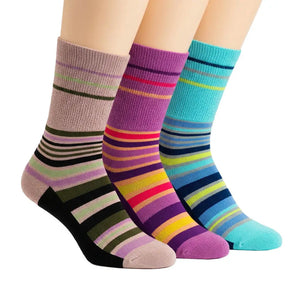
Diabetic Socks
Surgeon-designed for comfort and healthy circulation — with free shipping on orders over $30 CAD.
Shop Diabetic Socks →About the author
Dr. Jean Segal is a surgeon with more than 35 years treating venous disease, and the founder of Dr. Johnny's. He designs every sock and foot-care product to support circulation and comfort at every age.
Feet-first, straight to your inbox
Practical foot-health tips from Dr. Segal. No spam — unsubscribe anytime.